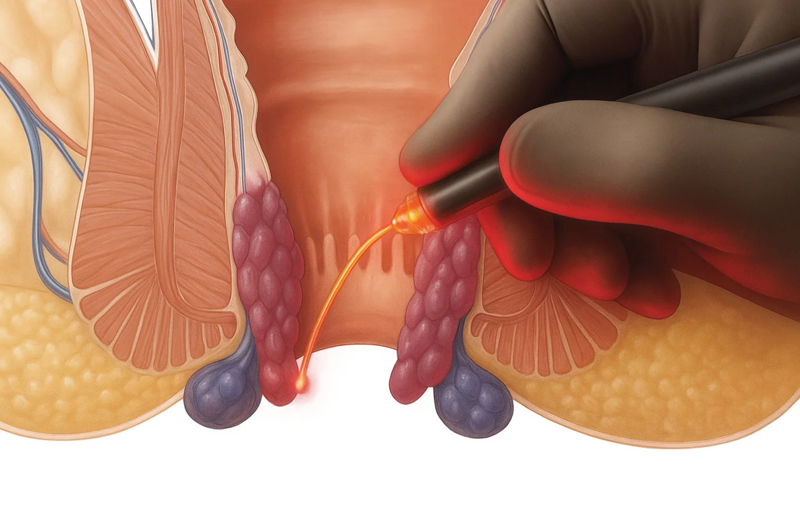
Laser Hemorrhoidectomy and Hemorrhoidopexy are advanced procedures used for the treatment of symptomatic hemorrhoids. Depending on the type and severity of piles, these techniques may help reduce symptoms while supporting a quicker recovery compared with some conventional surgical approaches.
Laser Hemorrhoidectomy uses controlled laser energy to treat or remove problematic hemorrhoidal tissue. Hemorrhoidopexy is a procedure in which prolapsed hemorrhoidal tissue is repositioned and secured higher within the anal canal. The appropriate technique depends on the type, size, grade, and symptoms of the hemorrhoids.
Common symptoms of hemorrhoids that may require medical evaluation include:
Hemorrhoids develop when the blood vessels and supporting tissues in the lower rectum and anus become swollen or enlarged. Increased pressure in these veins can contribute to the development or worsening of hemorrhoids.
Common contributing factors include prolonged straining during bowel movements, constipation, frequent diarrhea, prolonged sitting, and increased abdominal pressure.
Repeated straining during bowel movements can increase pressure on hemorrhoidal veins.
Spending long periods sitting, especially on the toilet, may contribute to hemorrhoid symptoms.
Insufficient dietary fibre can contribute to hard stools and constipation.
Pregnancy and conditions that increase pressure in the abdomen may contribute to hemorrhoids.
Hemorrhoids are diagnosed through a detailed medical history and physical examination. Depending on the symptoms, the doctor may perform a digital rectal examination or use an anoscope to examine the anal canal and rectum. Additional tests may be recommended when necessary, particularly when bleeding needs further evaluation.
You should consult a doctor if you experience persistent rectal bleeding, recurring pain, significant swelling, prolapsed hemorrhoids, or symptoms that do not improve with basic measures. Severe pain, heavy bleeding, dizziness, weakness, or rapidly worsening symptoms require prompt medical attention.
Treatment is selected according to the grade and severity of hemorrhoids, symptoms, previous treatments, and overall health. Mild cases may improve with lifestyle and medical measures, while persistent or advanced hemorrhoids may require a procedure or surgery.