
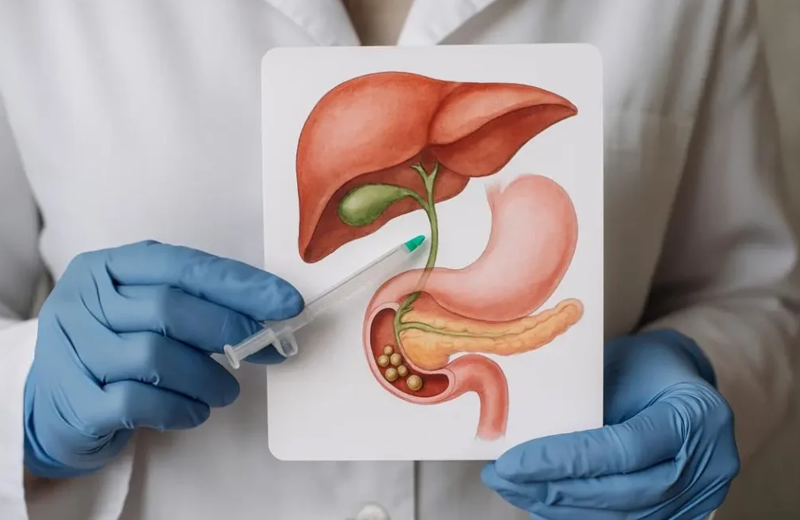
Gallbladder stones, also known as gallstones, are hardened deposits that can form inside the gallbladder. While some gallstones may not cause symptoms, symptomatic stones can lead to pain and other complications and may require medical treatment.
Gallbladder stones are solid particles that develop from substances present in bile, a digestive fluid stored in the gallbladder. They can vary in size and number and may remain without symptoms or block the bile ducts, causing pain, inflammation and other digestive complications.
Gallstones can develop when there is an imbalance in the substances that make up bile. Excess cholesterol, excess bilirubin or improper emptying of the gallbladder can contribute to stone formation. Gallstones may gradually increase in size or number over time.
Diagnosis usually begins with a medical history and physical examination. An abdominal ultrasound is commonly used to detect gallstones and assess the gallbladder. Depending on the symptoms and clinical findings, your doctor may recommend blood tests or additional imaging investigations to evaluate the bile ducts and surrounding organs.
Consult a doctor if you experience repeated or severe abdominal pain, particularly in the upper right abdomen, nausea, vomiting or digestive discomfort after meals. Seek urgent medical attention if abdominal pain is accompanied by fever, chills, yellowing of the skin or eyes, or persistent vomiting.
Treatment depends on whether the gallstones are causing symptoms or complications. Asymptomatic stones may sometimes be monitored, while symptomatic or complicated gallstones may require surgical treatment. Your doctor will recommend the most appropriate option based on your symptoms and overall health.