
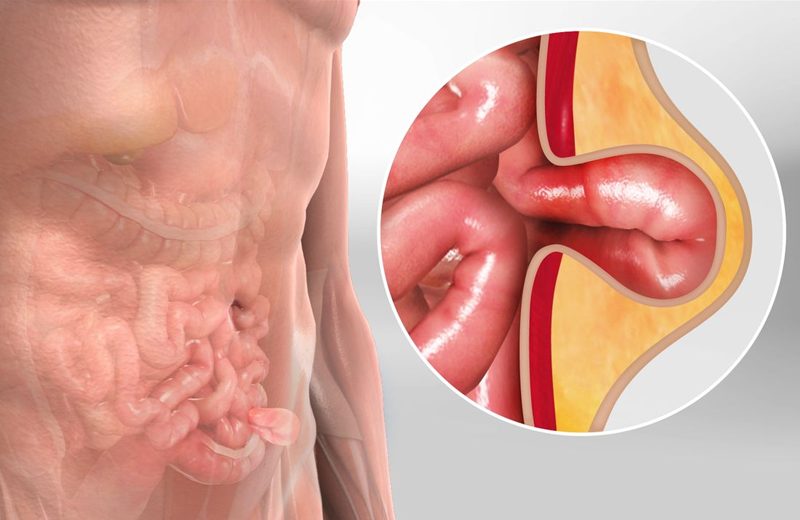
A hernia occurs when an internal organ or tissue pushes through a weak area in the surrounding muscle or connective tissue. With proper diagnosis and timely treatment, hernias can be effectively managed and treated.
A hernia develops when an organ or tissue pushes through a weakened area in the surrounding muscle or tissue. It commonly appears as a visible or noticeable bulge and may cause pain, discomfort or a feeling of pressure, especially during activities such as coughing, lifting or straining.
Hernias can develop when there is a combination of muscle weakness and increased pressure inside the abdomen. Common contributing factors include heavy lifting, persistent coughing, chronic constipation, straining during bowel movements, obesity and previous abdominal surgery.
Hernia diagnosis usually begins with a medical history and physical examination. Your doctor may examine the affected area while you are standing, coughing or straining. In some cases, imaging tests such as an ultrasound or CT scan may be recommended to confirm the diagnosis or assess the condition more closely.
Consult a doctor if you notice a new or growing bulge, persistent pain, increasing discomfort or difficulty performing daily activities. Seek urgent medical attention if the bulge becomes very painful, firm or cannot be pushed back, especially when accompanied by vomiting or abdominal pain.
Treatment depends on the type, size, location and symptoms of the hernia. Depending on the condition, your doctor may recommend observation for selected cases or surgical repair to strengthen the weakened area and prevent complications.