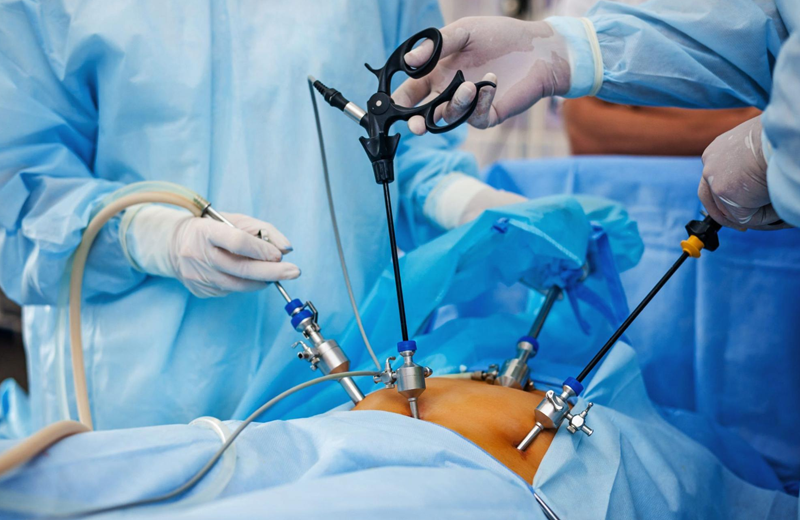
Laparoscopic surgery is a minimally invasive surgical technique performed through small incisions using a camera and specialized instruments. It can be used for a wide range of abdominal and general surgical conditions and may offer benefits such as smaller incisions, less postoperative discomfort, and faster recovery in selected cases.
Laparoscopic surgery, also known as minimally invasive surgery, is a technique in which the surgeon operates through small incisions using a laparoscope and specialized surgical instruments. The camera provides a magnified view of the surgical area, allowing the surgeon to perform precise procedures without making a large traditional incision.
Laparoscopic techniques may be used for several general surgical conditions, including:
The suitability of laparoscopic surgery depends on the patient's condition, medical history, severity of disease, and overall health.
During laparoscopic surgery, small incisions are made to allow the insertion of a camera and specialized instruments. The abdomen is usually gently inflated with carbon dioxide to create space for the surgeon to work. The procedure is performed while viewing the surgical area on a high-definition monitor.
Usually involves smaller cuts compared with traditional open surgery.
Selected patients may experience less pain after minimally invasive surgery.
Small incisions may result in smaller and less noticeable surgical scars.
Many patients may return to normal activities sooner, depending on the procedure.
Before surgery, the doctor evaluates your symptoms, medical history, physical examination findings, and diagnostic test results. Imaging and laboratory tests may be recommended when required. The surgeon will determine whether laparoscopic surgery is suitable and discuss the procedure, anesthesia, expected recovery, and possible risks.
Laparoscopic surgery may be considered when a diagnosed condition can be safely treated using a minimally invasive approach. If you have persistent abdominal symptoms, recurrent problems, or a condition that may require surgery, consult a qualified surgeon for a detailed evaluation and treatment recommendation.
The laparoscopic procedure performed depends on the condition being treated. After evaluation, your surgeon will recommend the most appropriate surgical technique based on your individual needs.