
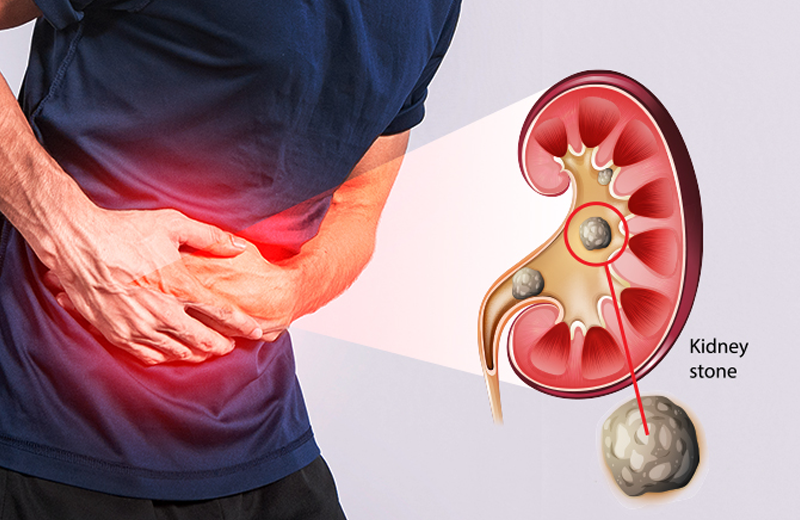
Kidney stones are hard deposits that form inside the kidneys from minerals and salts present in urine. They may cause severe pain when they move through the urinary tract. Early diagnosis and appropriate treatment can help relieve symptoms and prevent complications.
Kidney stones are solid, crystal-like deposits that develop when certain minerals and salts in the urine become highly concentrated and form crystals. Stones can vary in size and may remain in the kidney or travel through the urinary tract, sometimes causing pain, blockage or difficulty passing urine.
Kidney stones can develop when the urine contains high levels of substances such as calcium, oxalate, uric acid or other stone-forming minerals. Dehydration, certain dietary habits, changes in urine composition and some medical conditions can increase the likelihood of stone formation.
Diagnosis usually begins with a medical history, physical examination and urine or blood tests. Imaging such as ultrasound or CT scan may be recommended to identify the size and location of the stone and determine whether there is any blockage or complication in the urinary tract.
Consult a doctor if you experience severe or persistent pain, blood in the urine, difficulty urinating, repeated urinary symptoms or recurring kidney stones. Seek urgent medical attention if severe pain is accompanied by fever, chills, vomiting or inability to pass urine, as these may indicate a significant blockage or infection.
Treatment depends on the size, location and type of kidney stone, as well as the severity of symptoms. Smaller stones may pass naturally with appropriate medical guidance, while larger or obstructing stones may require medicines, minimally invasive procedures or surgical treatment.