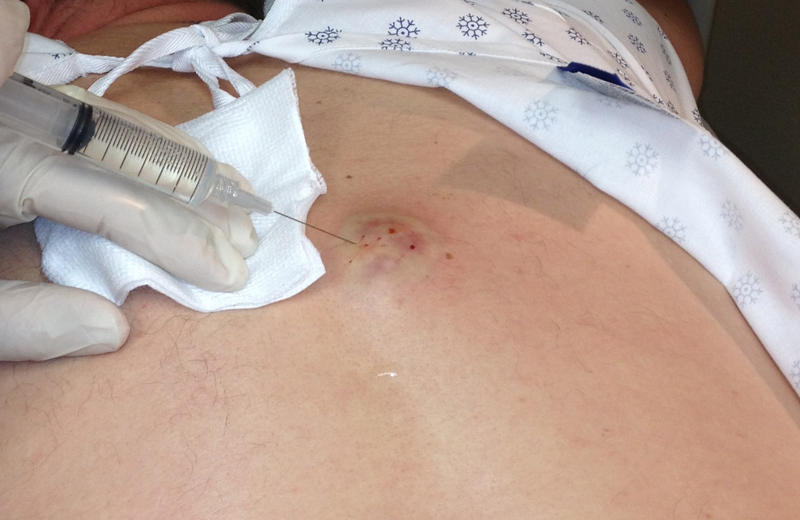
Incision and Drainage (I&D) is a commonly performed procedure used to treat an abscess, a localized collection of pus caused by infection. The procedure involves making a small opening in the affected area to drain the accumulated pus and relieve pressure, pain, and infection.
An abscess is a collection of pus that forms within body tissue due to an infection. Incision and Drainage is a procedure in which the surgeon makes a controlled incision over the abscess and allows the infected fluid to drain. The area may then be cleaned and dressed to support healing and prevent further infection.
Common symptoms of an abscess may include:
Abscesses commonly develop when bacteria enter the body through a cut, wound, hair follicle, blocked gland, or other opening in the skin. The infection can cause the body's immune response to form a collection of pus within the affected tissue.
Depending on its location, an abscess may also develop due to blocked glands, infected cysts, skin conditions, or infections in deeper tissues.
Cuts, wounds, insect bites, or damaged skin can allow bacteria to enter.
Blocked sweat or other glands can contribute to infection and abscess formation.
Diabetes may increase the risk of infections and can sometimes affect wound healing.
A history of abscesses may increase the likelihood of developing another infection.
An abscess is usually diagnosed through a physical examination of the affected area. The doctor evaluates the size, location, tenderness, redness, and presence of pus. Ultrasound or other imaging tests may be recommended when the abscess is deep, difficult to locate, or not clearly visible on examination.
You should consult a doctor if you develop a painful, swollen, red, or warm lump, especially if it is increasing in size or producing pus. Prompt medical attention is important if symptoms are associated with fever, chills, severe pain, rapidly spreading redness, or increasing swelling.
Treatment depends on the size, location, severity, and cause of the abscess. A collection of pus often requires drainage, while medicines may be used when clinically indicated. The doctor will determine the most appropriate treatment after evaluation.