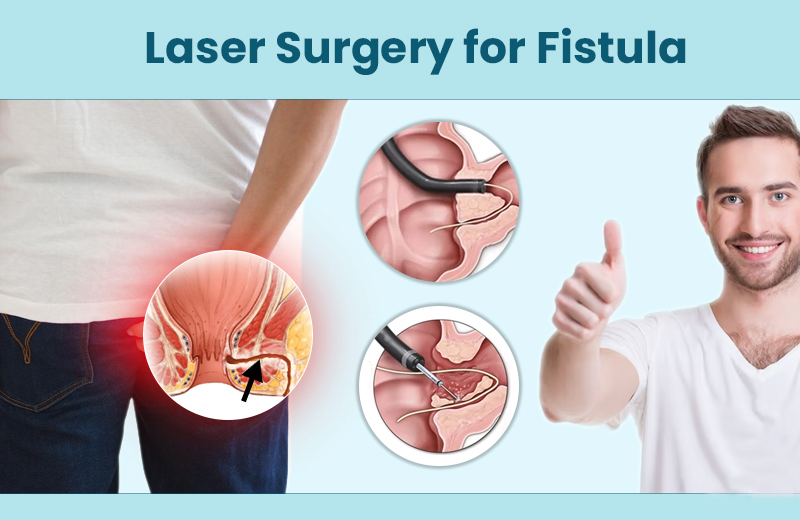
Laser Fistulectomy is a minimally invasive approach used to treat selected anal fistulas. It uses controlled laser energy to address the fistula tract while aiming to minimize damage to surrounding healthy tissue. The treatment approach depends on the location, complexity, and extent of the fistula.
Laser Fistulectomy is a surgical technique used for the treatment of an anal fistula, which is an abnormal tunnel connecting the anal canal or rectum to the surrounding skin. During the procedure, a specialized laser may be used to treat the fistula tract with controlled energy. The exact procedure is selected according to the fistula's anatomy and involvement of the anal sphincter.
Common symptoms of an anal fistula may include:
Anal fistulas most commonly develop following an anal abscess. When an infected gland or abscess does not heal completely, an abnormal tract may form between the anal canal and the skin. Other causes may include inflammatory bowel conditions, previous anorectal procedures, trauma, or certain infections.
A history of an anal abscess is one of the most common risk factors for fistula formation.
Conditions such as Crohn's disease may increase the risk of developing anal fistulas.
Certain procedures or injuries around the anal region may occasionally contribute to fistula formation.
Repeated infections or poorly healing abscesses may increase the likelihood of fistula development.
Diagnosis usually begins with a detailed medical history and physical examination of the anal region. Depending on the complexity and location of the fistula, additional tests such as an MRI scan, endoanal ultrasound, or examination under anesthesia may be recommended to identify the complete fistula tract and plan appropriate treatment.
Consult a doctor if you experience persistent anal pain, recurring swelling, pus or fluid discharge, repeated abscesses, or a wound near the anus that does not heal. Seek prompt medical attention if symptoms are accompanied by fever, severe pain, rapidly increasing swelling, or other signs of infection.
Treatment depends on the fistula's location, complexity, involvement of the anal sphincter, and the patient's overall health. The goal is to treat the fistula while preserving normal bowel control whenever possible.